
Seminole County 72-Hour Release Records
The Seminole County Sheriff’s Office has no verified public roster filtered to physical releases during the last three days. The official CustodyPortal is configured for active bookings, not former bookings. Its lack of a released-person result does not supply an exit time, release type, or destination. The defensible three-day list is an SCSO response covering an exact interval.
Request “all John E. Polk booking episodes with a physical release event” from the inclusive start timestamp through the inclusive end timestamp. Add local time and ask for the booking number, release timestamp, release type or code, and receiving agency or destination, with exempt fields redacted. The SCSO Public Records page provides the official GovQA and records-office channels. A broad interval may require extensive agency work, so request an estimate before costs are incurred.
Build Seminole County Three-Day Releases
A three-day inquiry works best as a reconciliation. Begin by fixing the start and end of the window. Then use each official source for the narrow fact it can prove. This avoids treating a weekend arrest report or a pretrial court entry as a complete list of people who left John E. Polk.
- Write the inclusive start and end timestamps in Seminole County local time. Keep the same boundaries throughout the check.
- Review the SCSO booking archive for likely booking episodes. Capture the booking number and date, not just the person’s name.
- Search current custody. A live match shows the person is still listed locally at that search time.
- Review the Clerk criminal docket and Pretrial Release Register for court authority, while recognizing that not every release appears in the register.
- Submit the interval request to SCSO and classify each physical exit by release type and destination.
- Follow FDC, federal, or immigration records when SCSO shows a transfer, and use VINE only as a status-notification cross-check.
The result may be smaller than the set of names found in booking or court records. That is expected. A person can be booked during the interval and remain confined after it ends. Another person can leave on a transfer without entering the community. For a fast same-day comparison, the Seminole County 24-hour release method uses a tighter interval and adds local processing guidance.
Note: A one-person request is usually more focused when the subject and booking episode are already known.
Seminole County 72-Hour Release Fields
Because no public 72-hour feed was verified, the field table describes what the interval response should contain. SCSO may use local codes, so ask the records custodian for each code’s definition. Keep the physical event separate from booking and court dates. The final court disposition also remains a Clerk fact rather than an inference from the jail’s original charge text.
| Field | Use in a three-day list |
|---|---|
| Name and booking number | Identifies the exact county booking episode and reduces same-name confusion. |
| Booking date and time | Shows when the local episode began, which may be before the selected interval. |
| Physical release timestamp | Determines whether the completed exit falls within the inclusive window. |
| Release type or code | Records the stated mechanism without guessing from roster movement. |
| Releasing authority or case | Links the event to the court order or other authority when recorded. |
| Destination or agency | Separates community release from continued state, federal, or immigration custody. |
Charges at exit can add context, but they do not replace the court docket. Bond, dismissal, time served, probation, and transfer can lead to very different next records. A person released from the county jail may also remain under supervision. “Released” should therefore name both the custodian and the event.
Seminole County Weekend Release Gaps
The three-day span is useful around weekends because SCSO’s Daily Booking Report follows a business-day pattern. The Sheriff says reports are posted on weekdays at about 8 a.m., and Monday includes weekend arrests. This is intake cadence. It does not group physical releases into a 72-hour view, nor does it show a bond result or release field.
The archive can still help. A booking number from Friday through Sunday can focus a later SCSO request and a Clerk search. Yet the reporting window and the requested release window may not align. For example, an entry in a Monday booking report may remain at John E. Polk beyond the end of the three-day interval. Conversely, a release during the weekend may relate to a booking that began much earlier and does not appear in the current short archive.
The official SCSO Daily Booking Report year archive provides the broader entry point to available intake reports.
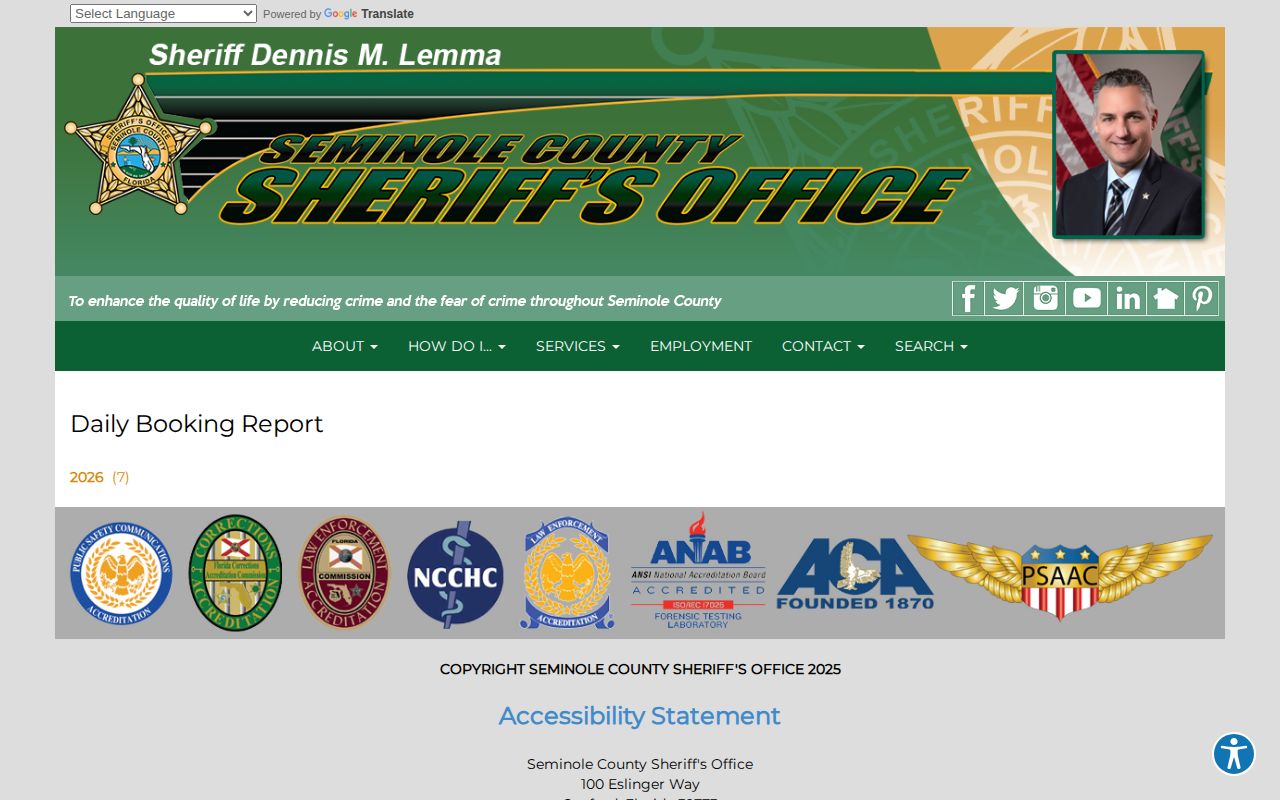
The year archive can lead to a likely booking episode, but no report in that intake archive becomes a rolling 72-hour release feed.
The SCSO short booking-report archive shows the recent report links that support episode identification.
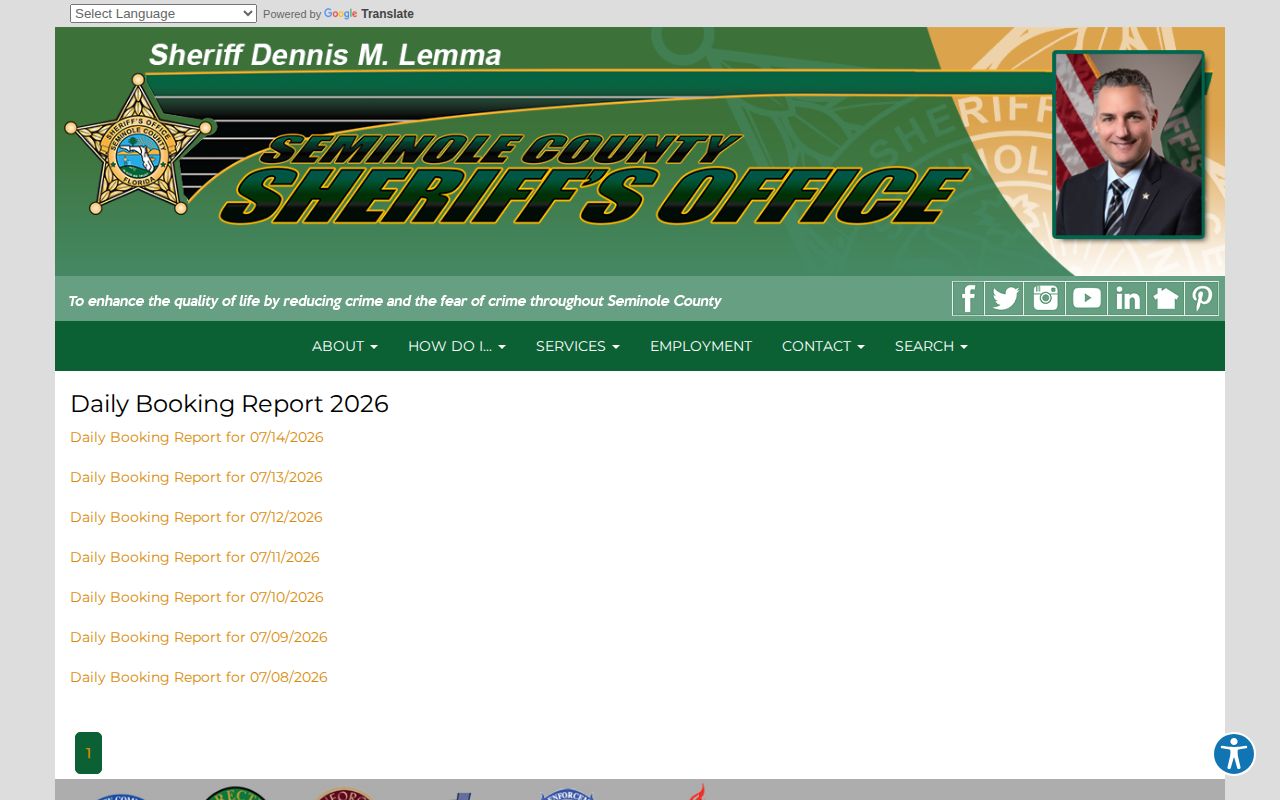
The archive’s observed short online span reinforces why it should not be treated as a lasting former-inmate or release database.
Note: No official Seminole source promises a special Friday release when a sentence end date falls on a weekend or holiday.
Seminole County Pretrial Release Register
The Seminole Clerk’s Pretrial Release Register is a valuable local source organized by year and month. It covers court-supervised pretrial release, not all physical departures from John E. Polk. It will not serve as a universal list of bond-outs, time-served exits, dismissals, transfers, state movements, or federal movements.
Use a matching entry to support the specific statement that a person entered the reported pretrial program. Then open the criminal docket for the case sequence and obtain the SCSO event record for the physical exit. The research observation on July 14, 2026 found the latest displayed register date was June 14, despite the statutory weekly-update rule. That observed lag means the register should not be treated as real time.
The official register capture shows its month-and-year navigation.
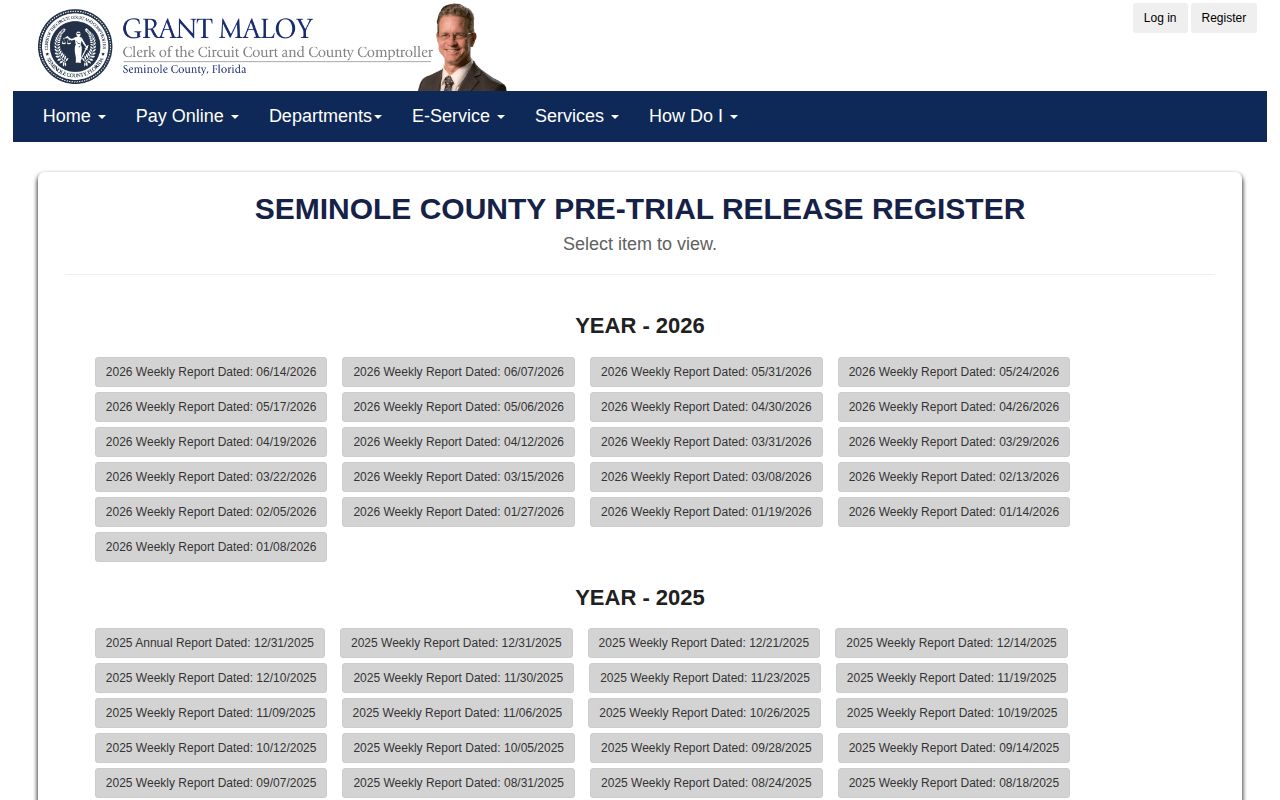
The register can explain one court-supervised path, while SCSO remains the source for the county jail’s physical release event.
Seminole County Former-Roster Limits
Seminole’s public CustodyPortal presents a technical trap. Its vendor-generic source contains Current, Released, and All Records options, but the county configuration observed July 14, 2026 forces active bookings and disables the selector. The words suggesting released records may be visible to an automated crawl even though a person cannot choose that view. SCSO therefore publishes no former-roster display period through the usable search.
Web display and government record retention are different. Florida’s GS2 schedule sets a minimum of one anniversary year after release for Booking Records, Commitment and Release Lists, and Inmate Incarceration Records. Jail Docket Books are permanent. Those minimums do not promise online access, and they do not prove destruction once the minimum ends. Holds, litigation, or agency schedules may extend retention.
The official Seminole CustodyPortal capture documents the current-inmate search presented to the public.
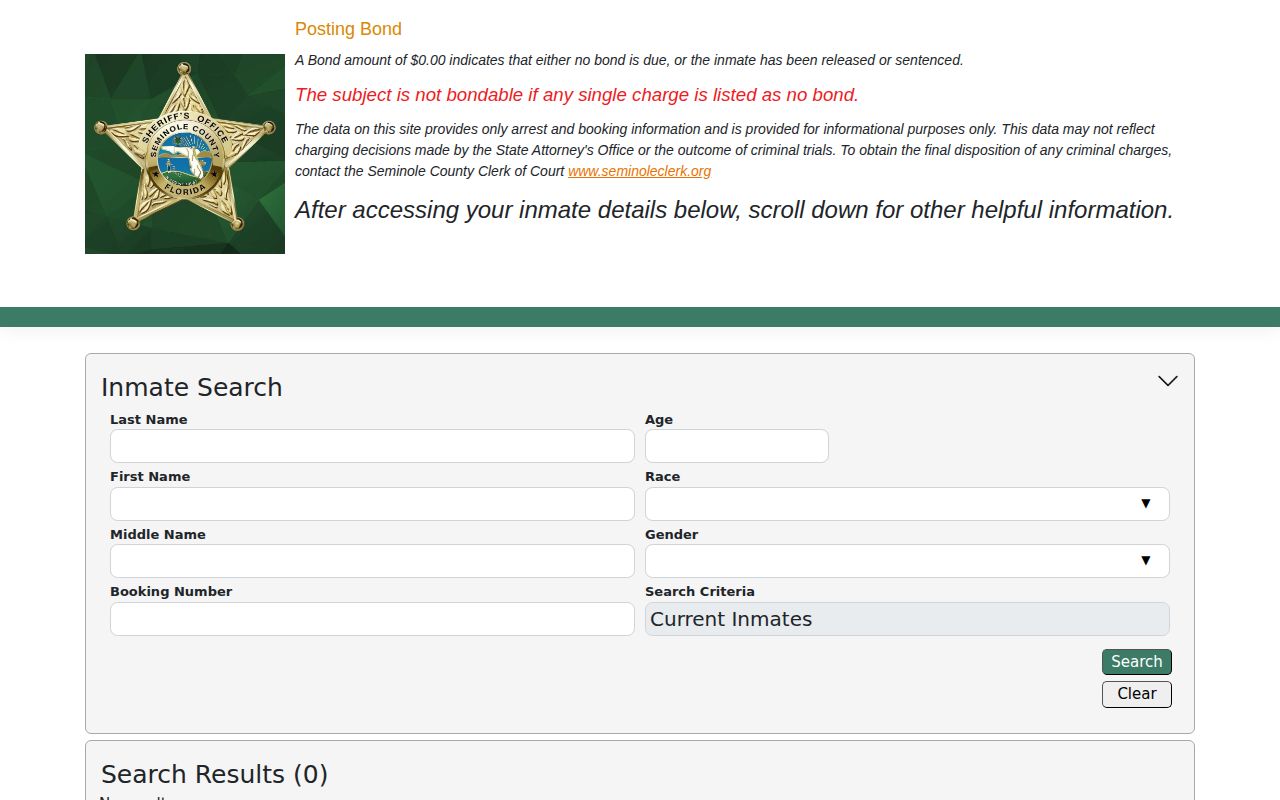
Use the portal to test current local custody, not to measure who disappeared across three days.
Verify Seminole County Release Destinations
A release list is incomplete if it stops at the county jail door. John E. Polk holds pretrial detainees, sentenced misdemeanor inmates, convicted felony inmates awaiting FDC, and some federal defendants. A person who leaves the building may enter another sovereign’s custody. The destination field tells the reader which system should be checked next.
| Next source | What it can confirm |
|---|---|
| SCSO release record | County physical exit time, type, and destination for the booking episode. |
| Seminole Clerk docket | Court order, case action, sentence, or disposition related to the exit. |
| FDC offender searches | State-prison intake, later state release, or community supervision when applicable. |
| Florida VINE | An agency-supplied custody or movement notice that still requires verification. |
| BOP or USMS records | Federal sentenced or pretrial custody after a county-jail transfer. |
| ICE ODLS | Eligible immigration detention information after a transfer, subject to system limits. |
For one named person, use the Seminole County release and records search to follow the proper custodian rather than ordering a broad interval. VINE offers mobile notifications, but it is VINE, not a Sheriff recent-release app. No verified SCSO jail mobile app publishes a 72-hour list. A VINE transfer event must be read as a transfer.
FDC’s Inmate Release Information Search is for people released or scheduled for release from state custody. It does not cover a short county-only stay. BOP covers sentenced federal prisoners from 1982 forward, while USMS handles federal pretrial movement without an equivalent public name roster. ICE’s locator is separate again. Matching the source to the custodian prevents a county exit from being mislabeled as final discharge.
Note: Release from incarceration may coexist with probation, parole, conditional release, or another active supervision status.