
Seminole Released Mugshot Records
A booking photograph records appearance at one arrest and intake episode. It is not a portrait of current legal status. John E. Polk Correctional Facility can hold pretrial detainees, people serving county sentences, people awaiting transfer to the Florida Department of Corrections, and some federal prisoners. The same Seminole County image can therefore remain tied to a booking even after a dismissal, transfer, sentence, or release.
Florida public access begins with article I, section 24 of the state constitution and Chapter 119 of the Florida Statutes, subject to exemptions. The fact that a record was public at one point does not mean every portal must keep it online forever. Seminole's usable CustodyPortal is current-only. Once a person leaves, the Sheriff directs photo requests to its Public Information Unit rather than maintaining a former-inmate photo gallery.
Photo access and release proof must stay separate. The current roster may show a face while the person is still held. A requested former-inmate image may confirm the agency kept a photograph, but not the precise exit time. Conversely, a release record can prove the exit without including an image. Ask for both records only when both facts are needed, and keep the booking number attached to each response.
A booking photo proves one documented episode. Confirm identity, release, and case outcome through their own official records.
Where Seminole Release Photos Appear
Use the source that matches the custody episode. A county booking photograph is not interchangeable with an FDC correctional photograph or a registry image. VINE may receive a photo from an agency, but it is not the archive. BOP and ICE locators are not mugshot services. An official press release may preserve an agency-supplied photo, yet its caption and publication date remain essential context.
| Channel | Has a photo? | How to access it |
|---|---|---|
| SCSO current roster | May show the active booking photo | Search current custody; it is not a released-photo archive |
| SCSO Public Information Unit | Yes, when releasable | Request the former inmate's precise booking episode |
| Daily Booking Report | The sampled report did not | Use it to identify intake, not to prove release or obtain a photo |
| FDC release search | Often | Use for FDC releases or scheduled state releases |
| Florida VINE | Sometimes | Enable offender photos if available and verify the agency |
| FDLE qualifying registry | Yes for registrants | Use only for a person subject to that statutory registry |
| Official press or news archive | Sometimes | Read the caption and date, then confirm status elsewhere |
Commercial photo publishers and data mirrors can preserve stale, misidentified, or detached images. No such site is needed for the Seminole County search because official current, request, FDC, VINE, registry, and press paths exist. Do not pay a removal vendor before understanding Florida's statutory process and the publisher's own duty.
Source choice also protects against episode confusion. A current SCSO image belongs to the active county booking. An older press photo may come from a prior arrest. An FDC image belongs to a state correctional record, and a registry image serves an ongoing statutory purpose. Compare the identifier, agency, and record date. Visual resemblance alone is too weak to join separate records.
Seminole Mugshots Before and After Release
The SCSO Media and Jail Information page draws a clear line. Information and photographs for current inmates are available through the jail link. Booking photos for people no longer confined are requested from the Public Information Unit. That direct statement is the strongest local route for a released Seminole County inmate's booking photo.
The same source says daily booking reports post on weekdays at about 8 a.m., with Monday covering the weekend. Those reports focus on intake. The sampled PDF did not contain an image or a release field. Finding a name in that archive supports that a booking was published, but it cannot establish that the person was later released. The Seminole 24-hour release process explains the official same-day fallback.
The Sheriff's page displays both the former-inmate photo request rule and the report cadence.
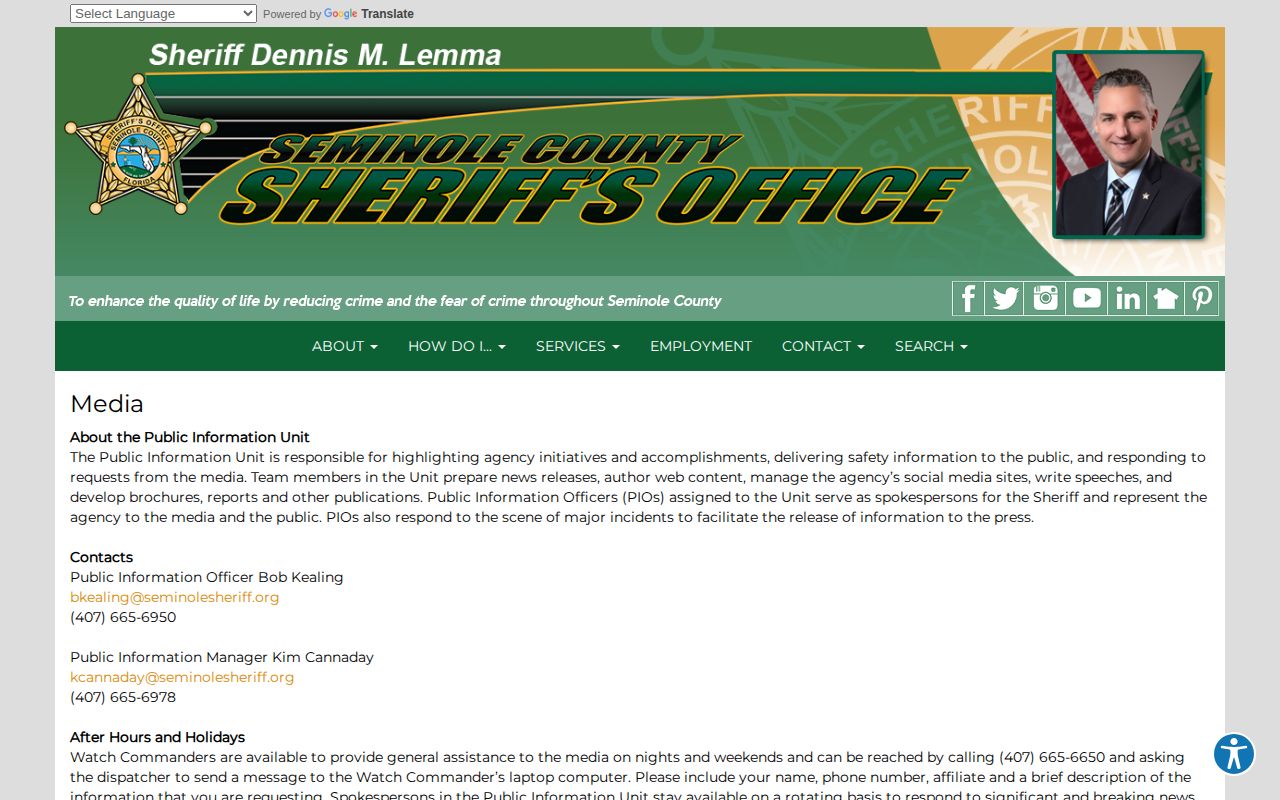
This before-and-after policy is more reliable than searching for a disabled “released” choice in the current-only roster.
Request a Seminole Booking Photo
Start with the booking episode, not just a name. The Public Information Unit is the photo route for a person no longer in John E. Polk. The Sheriff's Media page lists Public Information contacts, and the SCSO Public Records page supplies GovQA, email, mail, fax, phone, and in-person options for related records. Records is at 100 Eslinger Way in Sanford and publishes weekday office hours.
- Find the full name, approximate intake date, and booking number from a lawful official record.
- Ask for the booking photograph from that exact Seminole County booking episode.
- State that the person is no longer confined, so the request reaches the proper photo channel.
- Ask for an electronic copy and a cost estimate before processing if fees may apply.
- Keep the agency response with the image so its source and booking date remain clear.
SCSO publishes ordinary copy charges and may charge for extensive use, but no universal booking-photo fee or fixed response time was found. The actual estimate controls. A focused request reduces the risk of receiving a different arrest episode for someone with the same name.
If the booking number is unknown, the weekday booking archive can help narrow the date, while the Clerk criminal search can connect a case number to the same event. Neither source replaces the photo request. Include alternate spellings only when they are genuinely associated with the subject, and avoid broad date ranges that force staff to review unrelated files. The Seminole released-inmate record search shows how those identifiers fit the physical release record.
The public-record screen shows the Sheriff's request channels and published costs.
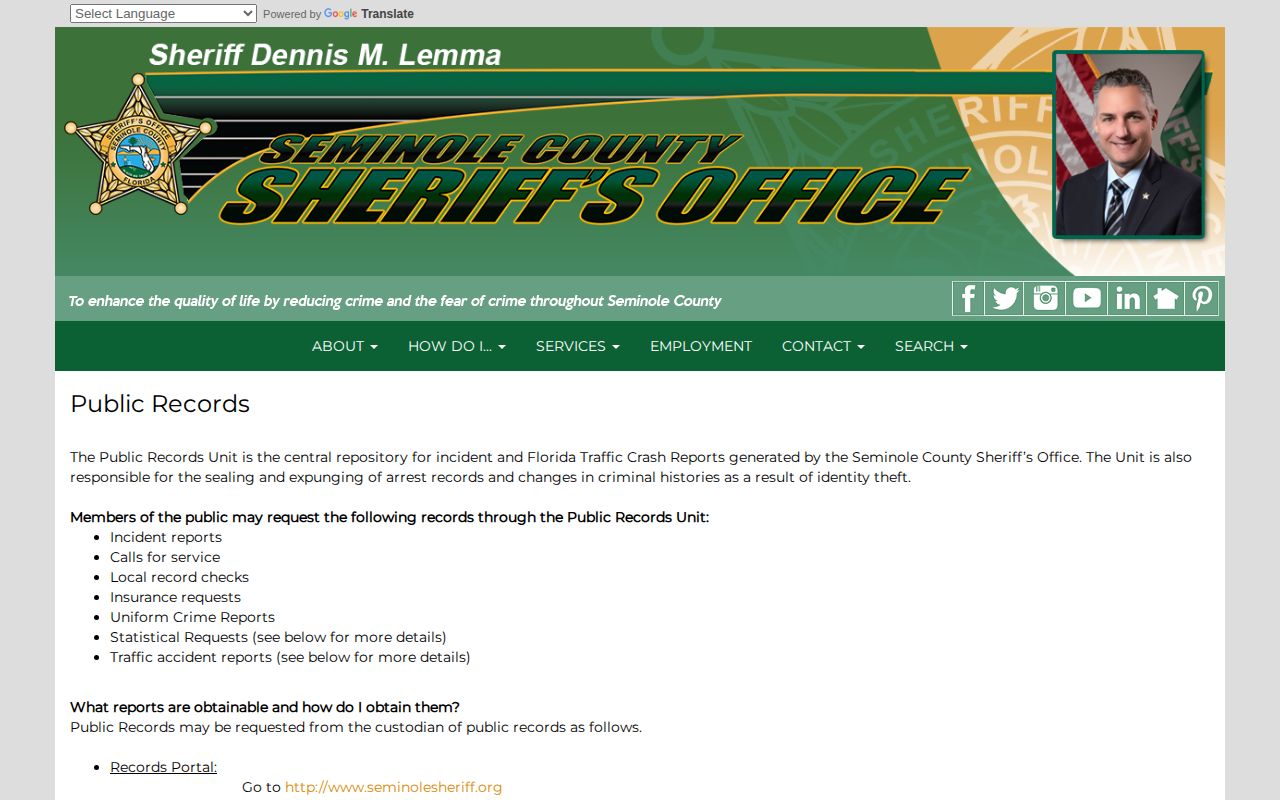
Ask separately for the release record if the goal is to prove that the person left custody.
Florida Photos for Seminole Releases
The FDC Inmate Release Information Search contains information and photographs for people released or scheduled for release from state corrections. FDC describes that database as updated nightly. It can be the right photo source after a John E. Polk transfer to state prison, but the image is an FDC image and may not be the Seminole County booking photograph.
The official release-search screen shows its nightly update and photo option.
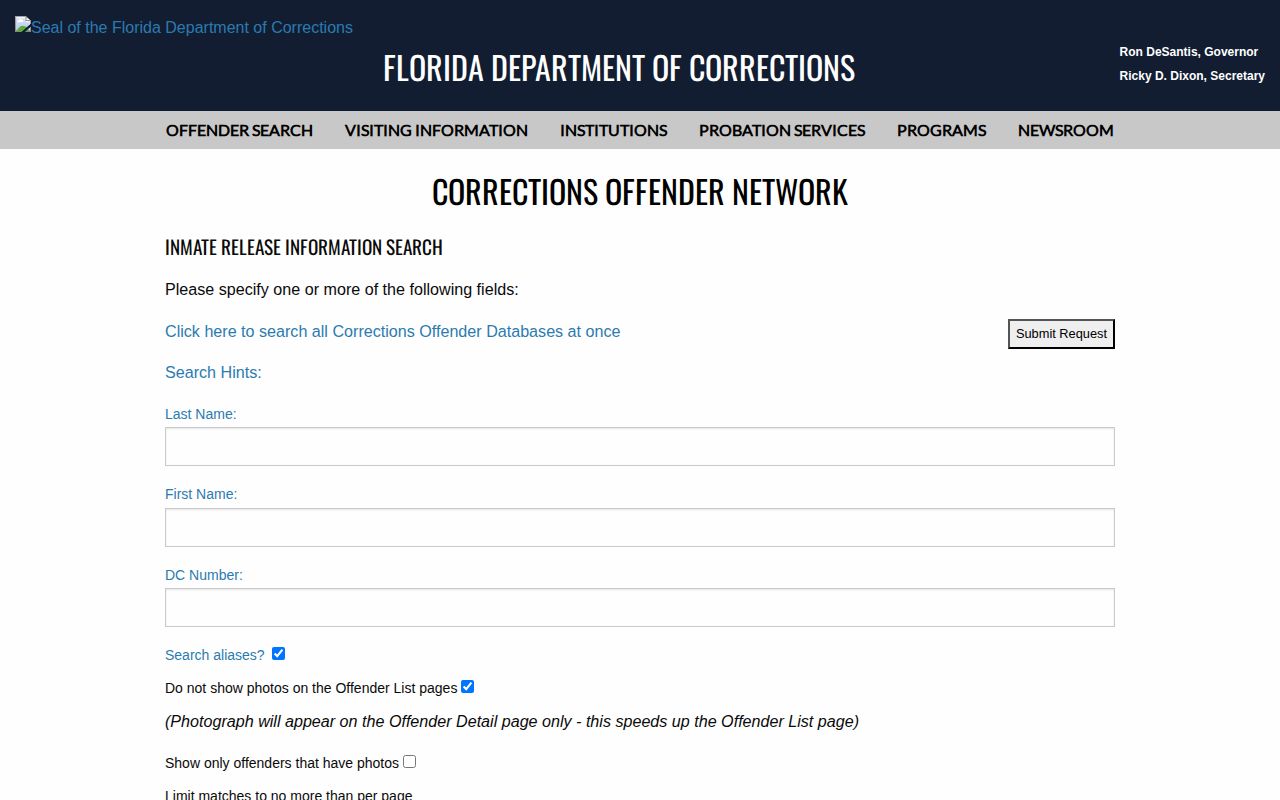
Match the DC number, sentence county, case information, and status before treating the photo as the intended person's state record.
An official Seminole-linked FDC release example shows how a photograph, release date, Seminole sentence information, and completed custody date can appear together.
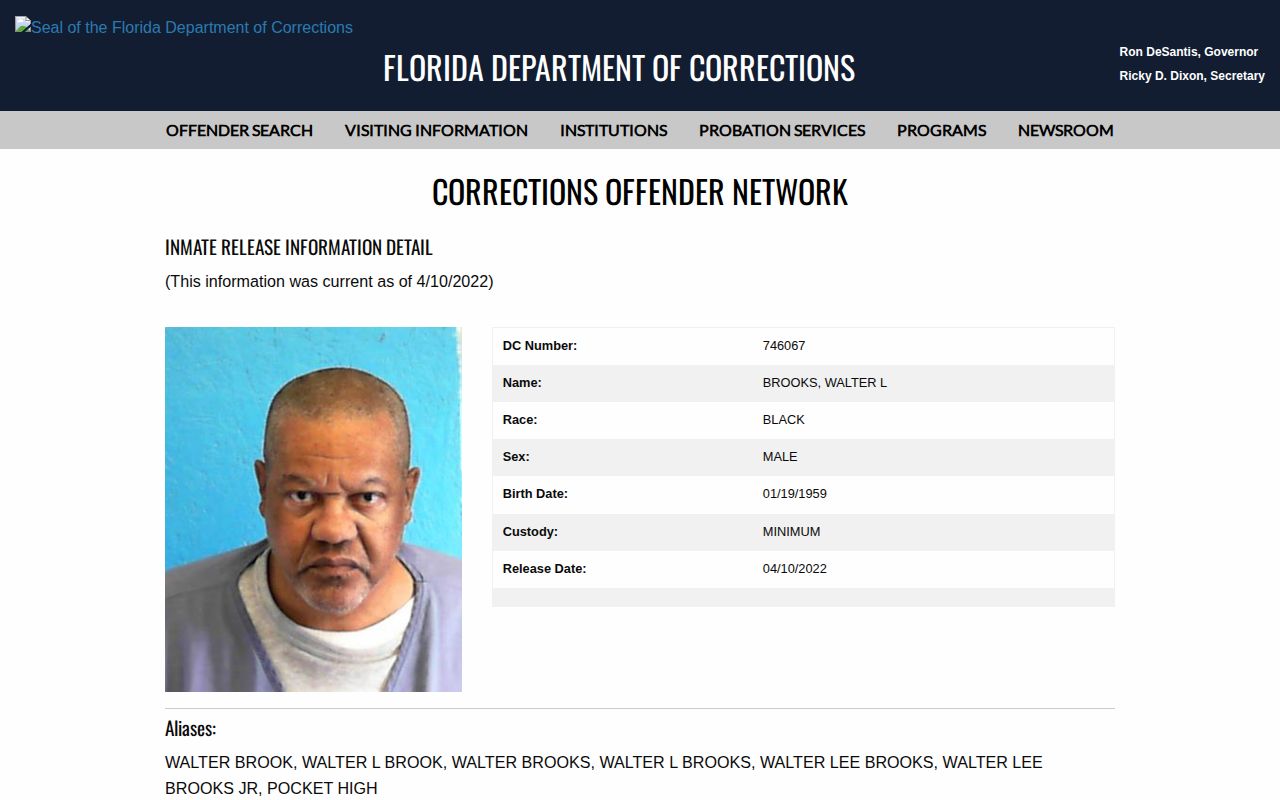
That state example demonstrates why the DC number and custody fields should stay with the image when the record is cited.
Florida VINE can also display an agency-supplied photo when available. Its settings allow a person to request that photos appear in results, but no photo is guaranteed. Because VINE is built for notification, use the contributing agency's record when a stable or certified image is needed.
A VINE match should be checked by agency and identifier before relying on the image. County jail and state-prison information arrive through different participating sources. A recently released result can age out, and the exact retention period for a live Florida result was not verified. Capture the event wording and access date without inventing an “out of custody” label that the result does not display.
Seminole Registry Photo Limits
The FDLE sexual offender and predator search can show photographs and legal status for people who have a statutory registration duty. Its advanced search includes “Released - Subject to Registration,” meaning the person is no longer confined or supervised by the listed justice systems but remains required to register. This is a narrow registry category, not a list of all Seminole County released inmates.
The official registry search makes that distinct legal scope visible.
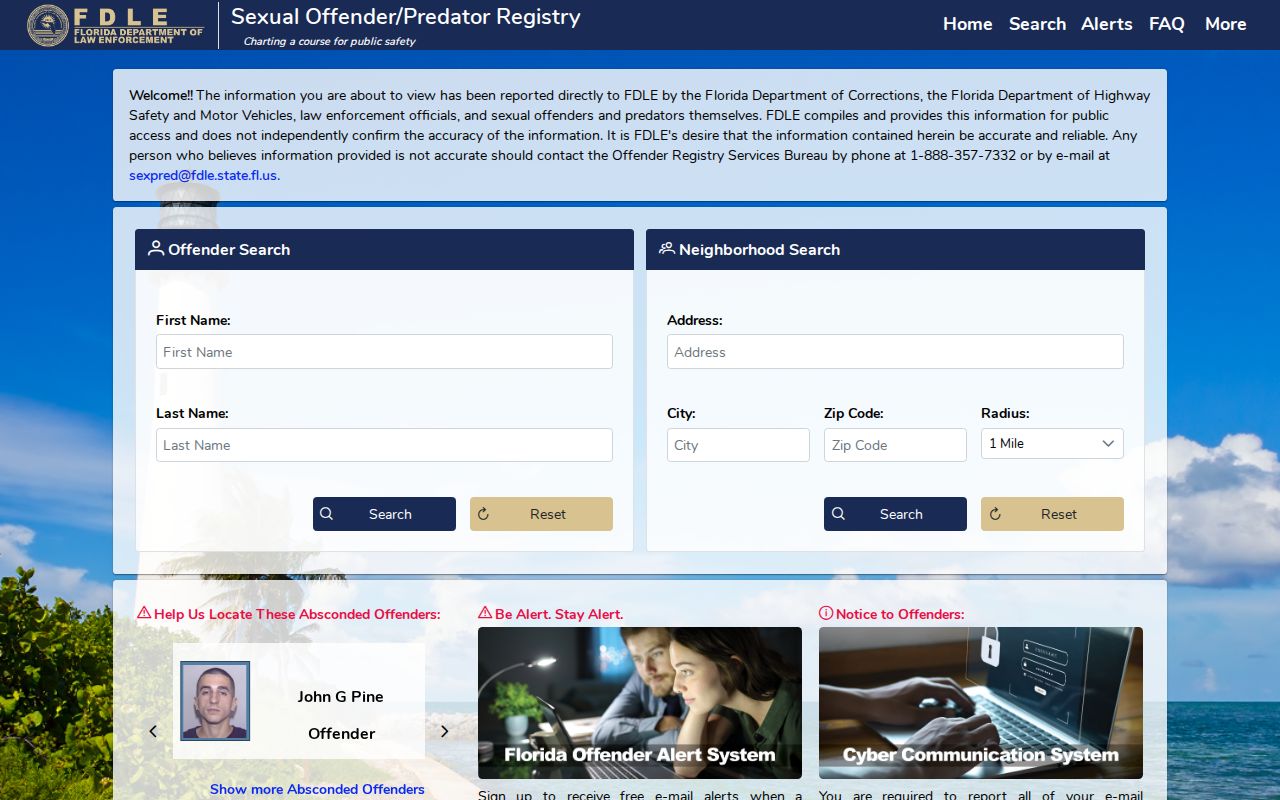
FDLE warns that positive identity ultimately requires fingerprint comparison. A similar name, address, or photograph is not enough to establish identity.
Seminole Press Photos After Release
An SCSO press release or a reputable local newsroom may retain a dated, agency-supplied booking image after the active jail record disappears. Read the image caption. It should say who supplied the photo and which event it depicts. Then check the article date, because an old arrest image may appear beside a later story.
Press publication is not a custody record. Confirm release through SCSO and the Clerk, FDC, or the receiving federal agency. BOP's inmate locator and ICE's online locator do not function as public mugshot archives, while U.S. Marshals policy limits public release of prisoner images and information. Do not promise that a federal photo request will succeed.
A dated SCSO press item is still preferable to an unattributed copy because the agency caption preserves provenance. Record the publication date and never crop away context that identifies the event.
Seminole Mugshot Removal and Expungement
Florida Statute section 901.43 governs publishers that disseminate booking photographs and solicit or accept payment to remove them. Its demand and remedy process applies to that commercial republication practice. It does not erase the Sheriff's original record, make every booking photograph confidential, or replace a sealing or expungement order.
Florida sealing and expunction laws apply only when legal requirements are met. A person should identify the source before asking for removal. An agency, court, news publisher, registry, and commercial publisher can each hold a different record under a different duty. Send a qualifying order or statutory demand to the entity that controls the copy, and keep proof of delivery.
This resource is not a consumer reporting agency. Mugshot information may not be used for any purpose regulated by the FCRA.
Even when a publisher removes an image, separate official records may remain. The safest description of a photo stays narrow: source, booking or correctional episode, and access date. It should never imply guilt, current appearance, present custody, or release without the matching record.
Removal from a commercial page also does not amend the Seminole Clerk docket or the Sheriff's response. If a court has sealed or expunged a qualifying record, send the controlling order through each custodian's prescribed process. Do not assume one request propagates to every copy. The agency can explain its own record treatment, while legal counsel can interpret whether an order reaches a disputed republication.