
Seminole Parole and Probation Compared
Parole and probation are different forms of supervision. Probation is generally imposed by a court as part of a sentence. It may follow a jail term or allow a person to remain in the community under stated conditions. Parole is a conditional release process that Florida now uses mainly for a limited legacy population. The Florida Commission on Offender Review, known as FCOR, decides qualifying parole matters. The Florida Department of Corrections, or FDC, administers field supervision. Seminole County Sheriff’s Office also runs adult misdemeanor probation for eligible county-court cases.
Those separate layers matter. A search of FDC can find state felony probation, community control, parole, conditional release, and other FDC-supervised programs. It may not show a local misdemeanor probation case managed by SCSO. An FCOR calendar answers whether a qualifying matter is scheduled for Commission action, not whether ordinary probation is active. The court docket remains the best source for the sentence and later violation or termination orders.
Custody status must also stay separate from supervision status. A person can leave John E. Polk on probation, leave state prison under conditional release, or enter supervision after completing another custody term. In each case, the physical release record answers when confinement ended. The supervision record answers what oversight followed. Neither record should be made to answer both questions without support from the other.
| Record type | Who orders or decides it | Where to verify |
|---|---|---|
| State probation or community control | Sentencing court | FDC Supervised Population Search and court docket |
| Adult misdemeanor probation | Seminole County court | SCSO Adult Misdemeanor Probation and Clerk docket |
| Parole | FCOR for a limited eligible group | FDC supervision record, FCOR agenda, and final order |
| Conditional post-prison release | Statute and FCOR action, depending on program | FDC record and exact FCOR action |
- Probation
- Court-ordered supervision in the community, sometimes after a period in custody.
- Parole
- Conditional release for a legally eligible prison population under Commission authority.
- Community control
- An intensive form of community supervision with stricter limits than standard probation.
- Discharge
- The formal completion or termination of supervision, shown by status or an order.
Check Seminole Post-Release Supervision
Begin with the person’s DC number when it is known. It is more precise than a name. The FDC Supervised Population Search can display the supervision type, current status, start date, scheduled termination date, current location, and supervision history. Compare identity details before relying on a result. A common name alone is weak proof.
- Search by DC number. If none is known, use the full name and compare birth date and other displayed identifiers.
- Read the exact supervision type and current status. Do not relabel every result as parole.
- Record the current location, begin date, and scheduled termination date with the date the search was run.
- Check the Seminole Clerk criminal docket for the sentence, amendments, violation filings, warrants, and termination order.
- For a county misdemeanor, contact SCSO Adult Misdemeanor Probation because the state search may not contain that local case.
- For a parole or Commission release matter, locate the FCOR agenda and obtain the final action or order.
The official FDC supervision screen shows the search structure used for state-supervised cases.
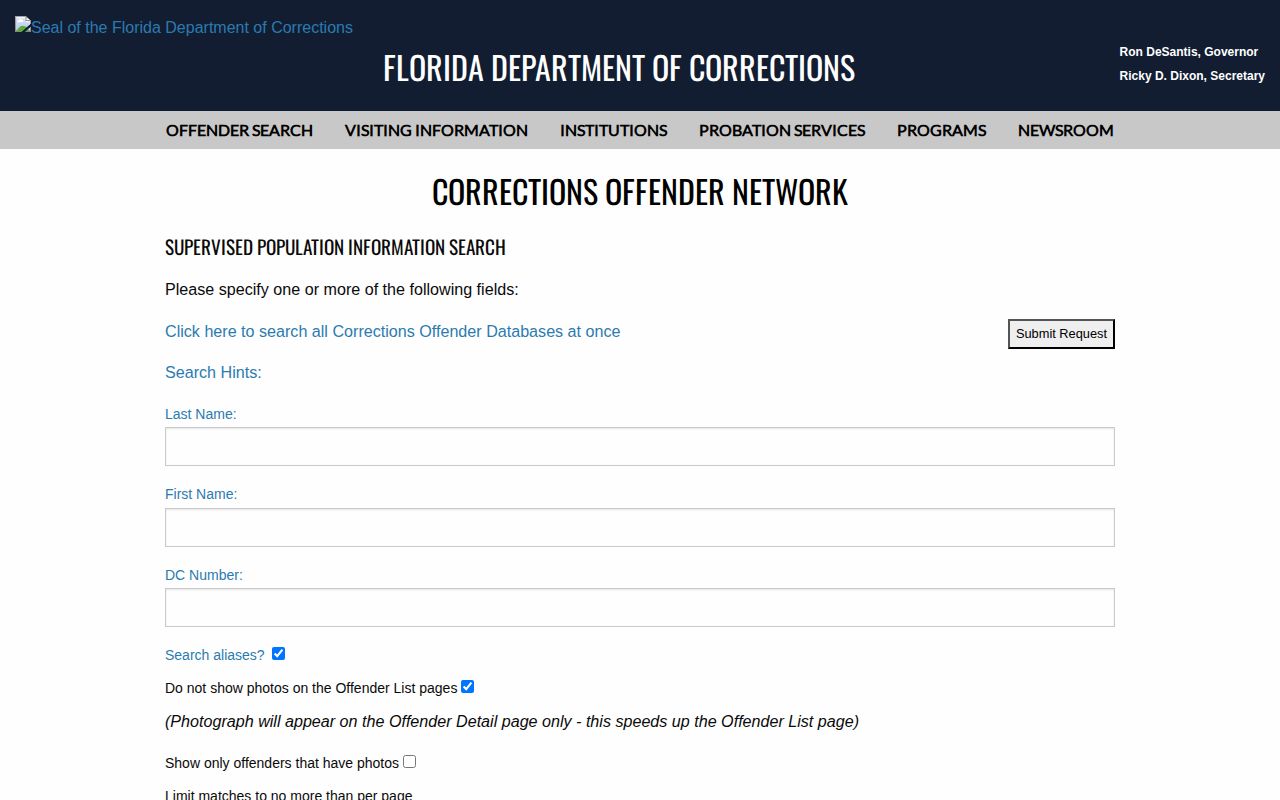
The captured screen helps identify the correct database, but the live record controls because status and office assignment can change.
Seminole Probation Uses Three Layers
Seminole County has no single all-purpose parole and probation counter. FDC handles state felony supervision and several post-prison programs. FCOR makes decisions in qualifying parole and other release matters. SCSO handles adult misdemeanor probation for qualifying local cases. This split is a distinctive local search issue: checking only FDC can miss county misdemeanor probation, while searching only an FCOR calendar can miss both ordinary state probation and local probation.
The SCSO Adult Misdemeanor Probation page provides monthly-report and travel-permit routes as well as office contacts. Use the court case number when asking about a local case. A person seeking proof that supervision ended should request the termination or discharge order or an official status record, not private case-management notes.
The official local page shows the Seminole misdemeanor probation contacts and tools.
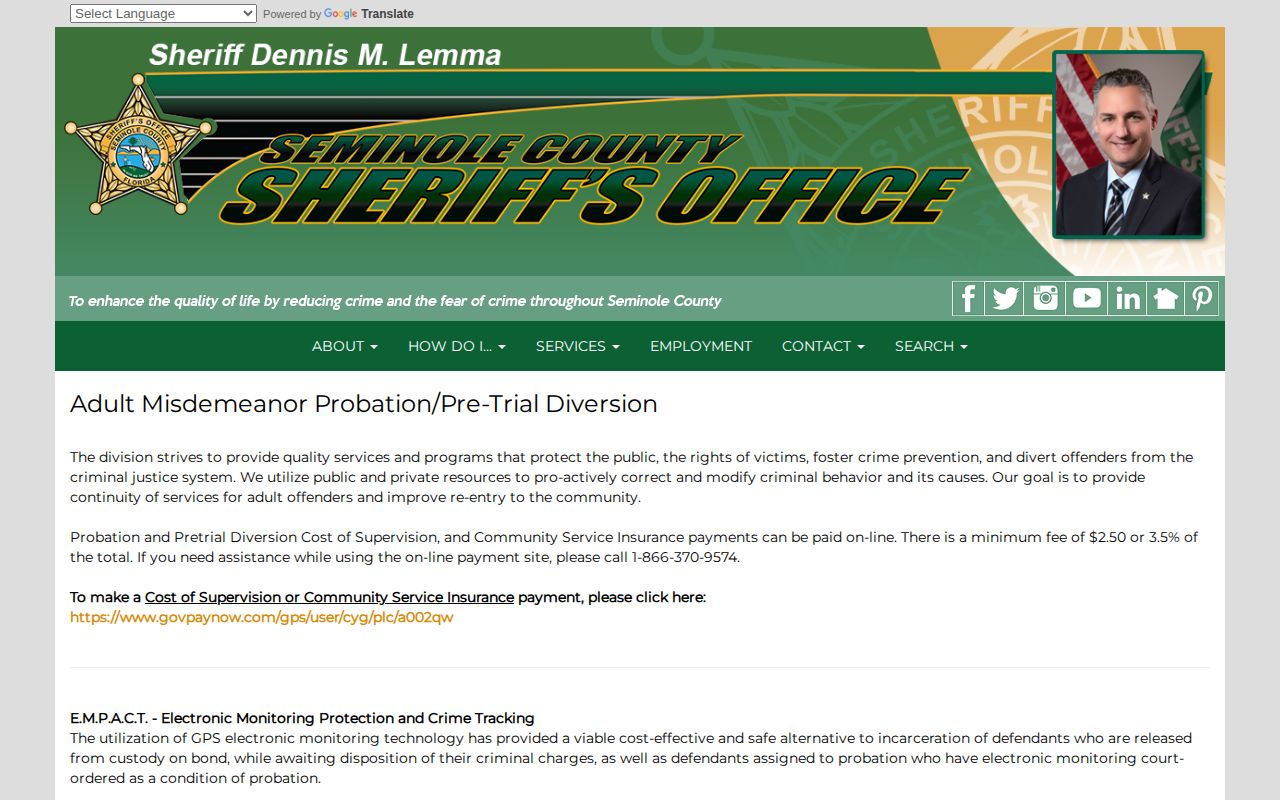
This local route fills the gap left by the state supervision search for qualifying county-court cases.
Seminole Supervision Office Contacts
An FDC detail identifies the current supervision location. Follow that live assignment because offices can change. FDC’s Circuit 18 serves Brevard and Seminole, and its directory currently lists Seminole Metro in Casselberry. SCSO’s Adult Misdemeanor Probation unit is a separate contact for qualifying county cases.
FDC Seminole Metro
101 Sunnytown Road, Suite 103
Casselberry, FL
407-262-7400
Confirm the current office from the person’s live FDC record.
SCSO Adult Misdemeanor Probation
407-665-4603
CoProbationQuestions@seminolesheriff.org
Weekdays, 8:00 a.m. to 4:30 p.m.
Use the published north or south office route shown for the case.
FDC Field Services can also be reached at 850-717-3444 or co-supervision@fdc.myflorida.com for state supervision questions. The supervising office can explain which public record confirms current status, but scheduled dates should not be treated as completed discharge without status support.
Read Seminole Supervision Status Carefully
FDC status words have specific meanings. Active means the person is actively supervised in the community. Active Suspense means the person is temporarily unavailable for direct supervision, which can include confinement in a jail or another facility, while the case remains monitored. Absconder means the person’s whereabouts are unknown or unavailable and a violation warrant has issued. None of those terms means successful completion.
A violation allegation does not itself establish the final court result. Check the Seminole Clerk docket for the filed affidavit, warrant, arrest, hearing, and order. A wanted or absconder notation also does not prove where the person is now held. If the record instead shows a scheduled termination date, treat it as a future date until a completed status or court order confirms discharge.
SCSO also publishes local registration context. The registered-felon status page is not a general probation list, but its labels illustrate why a local regulatory record must not be confused with FDC supervision.
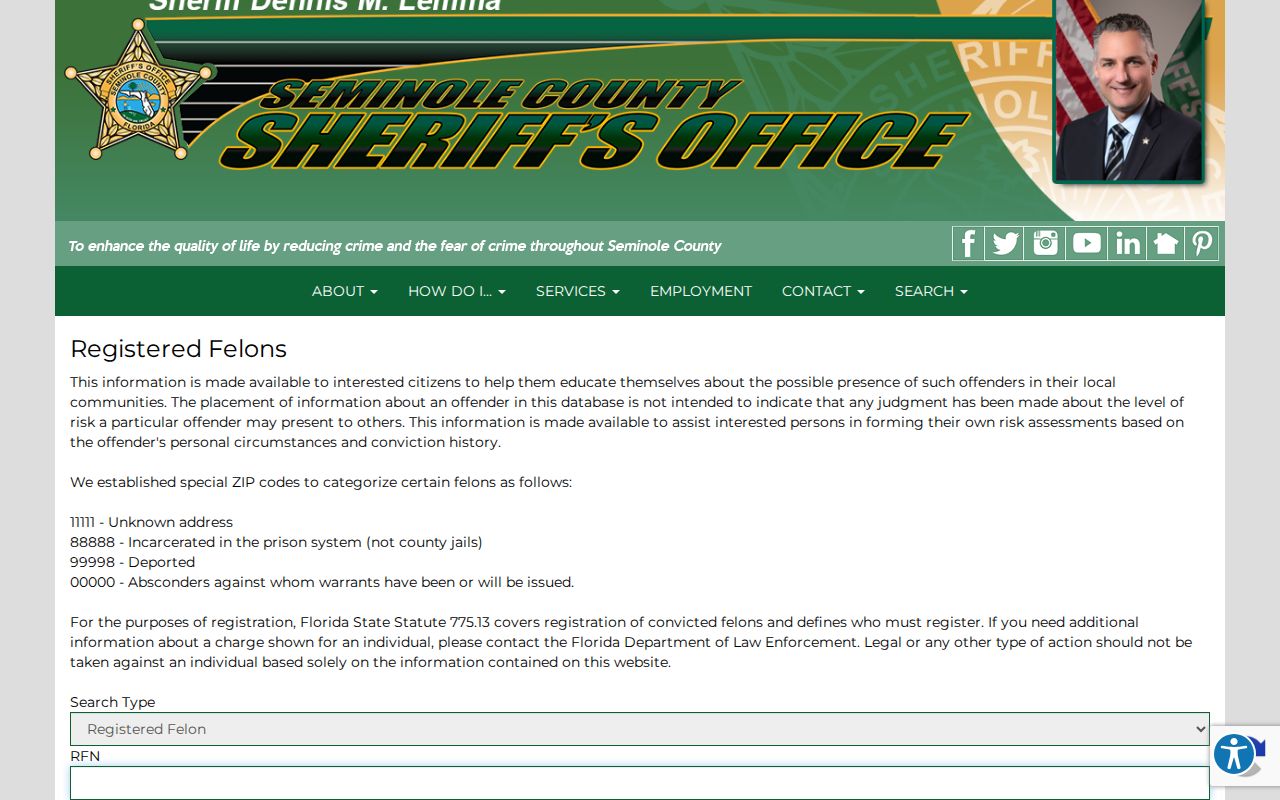
The distinction keeps registration, probation, parole, warrants, and current custody from being blended into one unsupported claim.
High-level conditions may include reporting, travel limits, treatment, payment duties, residence terms, or special court conditions. The signed order and supervision instructions control. Do not infer a violation from a missed public update. For release alerts tied to custody events, use VINE as a separate notification channel, then verify the event with the custodian.
Seminole Parole Hearings Need Orders
Florida parole is mainly a legacy process. Under chapter 947, eligibility turns on offense date, offense category, and statutory exclusions. FCOR describes pre-October 1983 cases and limited later categories. Sentence length alone cannot establish eligibility.
The FCOR voting schedule and agenda system list scheduled matters. An agenda can show a name, DC number, category, county, offense, case number, panel, date, time, and location. It proves scheduling, not the vote. A final action may establish or modify a presumptive parole release date, authorize release subject to a suitable plan, continue a case, deny relief, revoke supervision, or restore supervision. Quote the order’s exact terms.
The official Commission calendar shows the public scheduling route.
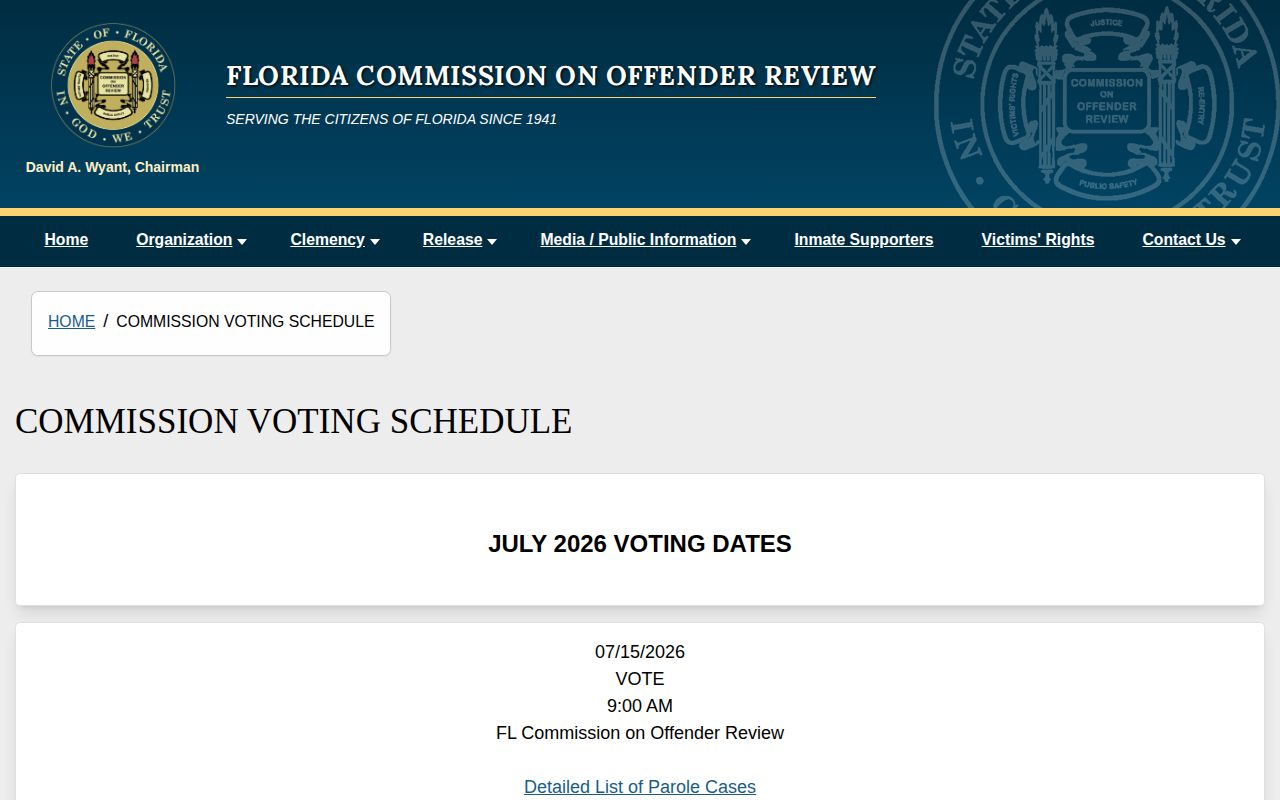
The calendar should be paired with the final action and updated FDC record before any release conclusion is made.
No dependable public name-searchable decisions database was verified. Request the final vote action from FCOR records using the name, DC number, meeting date, category, and case number. A favorable action or presumptive date can remain conditional. It is not the prison-gate event.
Property After Seminole County Release
Post-release planning may include property still held at John E. Polk. The published inmate handbook says a third-party property release generally begins with a kiosk or form request and covers all excess property, not selected items such as only keys. It also says government identification cannot be released to a third party without court authorization. Federal prisoners and people bound for FDC face pickup and storage rules, and the handbook describes a ten-day lobby notice for abandoned property before disposal.
That handbook dates from 2020. Verify the current process with John E. Polk at 407-665-1200 before anyone travels. Property handling does not establish whether probation, parole, or another supervision term is active. It is a separate release task tied to the jail episode.
Confirm Seminole Supervision Discharge
Supervision ends when the controlling agency or court records a completed termination or discharge. A scheduled termination date is a plan, not proof of completion. Search the latest FDC status, review the court docket for a termination order, and obtain the official order when the distinction matters. For parole, section 947.24 addresses discharge, while sections 947.172 and 947.174 govern parts of the interview and review process.
Prison release and supervision discharge are not synonyms. A person may leave FDC custody and begin probation, parole, conditional release, or another program. The broader Seminole County release search and record path is available on the Seminole County released inmates home page. Pair the completed incarceration record with the supervision record before stating that all correctional oversight ended.
Keep a copy of the live result and note the search date. If the public status conflicts with a later court order, contact the listed office and ask which record controls. Changes can take time to appear across systems, especially when a court, county program, FDC field office, and FCOR each maintain a different part of the case.
Note: The current status field and final order carry more weight than a projected termination date or a hearing-calendar entry.